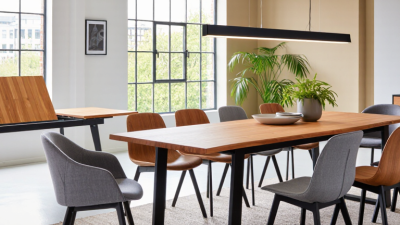
How to Choose the Best Dining Set in 2026?
Choosing the best Dinning Set in 2026 is less about chasing a trend and more about matching furniture to daily life. Measure the room before browsing. Leave enough space to pull out chairs and walk behind seated guests; a beautiful table feels cramped when every meal requires shuffling sideways. Note the doorway width, too. A set that cannot enter the home is no bargain.
Furniture designer Charles Eames offered a useful reminder: “The details are not the details. They make the design.” That idea applies to dining furniture: inspect chair joints, tabletop edges, finishes, and how firmly each piece stands on the floor. Sit in the chairs, if possible. A quick showroom test can reveal a stiff backrest or a seat that feels too narrow. Looks can deceive.
Think about who will use the set, and how often. A family with young children may value wipeable surfaces, while frequent hosts may prefer an extendable table and extra chairs. Check the care instructions and warranty before buying; claims such as “durable” need specifics. Prices, materials, and availability can change, so compare current product details rather than relying on old recommendations. There is no perfect set for every home. A small compromise—less dramatic grain, perhaps—may make more sense than a table that dominates the room. The right choice should fit the space, feel comfortable, and hold up to ordinary meals, not just staged photographs.

Assess Your Space, Household Size, and Dining Habits
How to Choose the Best Dining Set in 2026?
Assess Your Space, Household Size, and Dining Habits
Start with the room, not the table. Measure the dining area, then mark the table footprint with painter’s tape. Leave about 36 inches behind chairs where people need to pass; a chair pulled out beside a wall may need less. Check door swings, walkways, and nearby cabinets, too. The U.S. Census Bureau’s 2020 data put average household size at 2.54 people, but your daily needs matter more than the national average. A compact four-seat table can suit a small household, while extendable leaves help when guests visit. Bigger is not always better.
Think about how meals actually happen. The Bureau of Labor Statistics’ 2023 American Time Use Survey reports an average of about 1.24 hours daily spent eating and drinking by people aged 15 and older. That figure includes more than seated dinners, but it’s a useful reminder: dining habits vary. Do you eat quickly, work at the table, or linger over weekend meals? Choose a durable surface and comfortable chairs if the table serves many roles. It’s tempting to buy extra seats “just in case.” Sometimes they only crowd the room.
Tips: Tape out the table and chairs, then walk around them. Count everyday seats first; add occasional seating only if it fits. Check the measurements twice. A little awkwardness now beats a blocked doorway later.
Choose a Table Shape and Seating Capacity
Begin with the room, not the showroom: measure the floor space and note door swings, walkways, and nearby cabinets. Keep about 36 inches between the table edge and walls or other furniture, so chairs can slide back comfortably. Pull each chair out during your measurement; a table that fits neatly on paper may feel cramped in use. Check the corners. That extra clearance is easy to overlook, especially beside a busy kitchen walkway.
Shape affects both movement and seating. Round tables encourage conversation and suit square rooms, but a pedestal base usually gives knees more freedom than four corner legs. A 48-inch round table can often seat four, though wide chairs may make that feel tight. Rectangular tables work well in longer rooms and can usually add places along their sides. Allow roughly 24 inches of table edge per person, then check the actual chair widths. Treat advertised seating capacity as a guide, not a promise. This is where plans often fail: bulky armchairs can take more space than expected. If possible, mark the tabletop dimensions on the floor and place chairs around it. Leave one seat unused in the test; real meals need room for elbows and serving dishes.
Compare Materials, Construction, and Long-Term Durability
A dining set can look sturdy in a photograph and still wobble after a year of daily use. Compare materials by how they handle your room, not just by appearance. Solid wood can be repaired and refinished, but it may move with changes in humidity. Veneer often costs less and can look refined; check that its edges sit flat and its surface has no bubbles. Metal frames resist many knocks, though thin tubing or loose joints can feel unstable. Feel the weight. A useful in-store test is to press gently on each table corner and pull a chair across the floor. Notice any rocking, creaking, or sharp edges.
Construction details often reveal more than a material label. Look underneath the table for reinforced corners, secure fasteners, and legs that attach firmly to the frame. On chairs, inspect the joints and sit back with your feet resting naturally. A slight flex is normal; a repeated click is not reassuring. Check whether screws can be tightened and whether replacement parts are available. That matters. For long-term durability, match care needs to your household: sealed surfaces handle spills more easily, while unfinished wood needs quicker attention. Ask how to clean the finish, and test chair clearance before buying. I would not assume a heavier set is automatically better; weight helps, but sound joinery and a stable shape matter more.
How to Choose the Best Dining Set in 2026?
Compare indicative service-life ranges by material. Actual durability depends on construction, use, and care.
These broad estimates are for comparison, not guarantees. Strong joints, quality finishes, and appropriate care can matter as much as the material itself.
Match the Set’s Style and Care Needs to Your Home
A dining set should suit the way your home feels and functions, not just look appealing in a showroom. In a compact kitchen, a round table can make tight walkways easier to navigate. A rectangular table may fit better in a long room or seat extra guests. Check chair height against the table, and leave enough space to pull chairs back without bumping a wall. Style matters, but comfort matters every evening.
Care needs should match your real routine. If children use the table for crafts, a sealed wood or easy-wipe surface may be more practical than a delicate finish. Glass can brighten a small room, though fingerprints show quickly. Upholstered seats feel welcoming, but textured fabric may hold crumbs. Think about sunlight, pets, and how often you want to clean. A perfect-looking set that needs constant attention can become tiring. I might still choose the prettier option sometimes; that is not always the sensible choice.
Tips: Measure the room, including chair clearance, before shopping. Bring home finish samples if possible, and view them beside your flooring in daylight. Ask how the surface should be cleaned, then choose a care routine you can actually keep.
Evaluate Budget, Delivery, Warranty, and Sustainability
A dining set’s price is only the starting point. The U.S. Bureau of Labor Statistics reported average annual household spending of $77,280 in its 2023 Consumer Expenditure Survey. That figure covers every household expense, not furniture alone, but it puts a dining purchase in perspective. Set a firm total that includes tax, delivery, assembly, and possible stairway fees. Measure the room with chairs pulled out; a table that fits on paper may block the kitchen path.
Delivery terms deserve a close read. Ask whether the crew carries the set inside, assembles it, and removes packaging. Check what happens if a tabletop arrives scratched or a delivery window is missed. Warranty length matters, but so do exclusions for loose joints, finish wear, and everyday use. Keep the terms and receipt together. Small detail, big difference.
Sustainability is more than a recycled-material label. The U.S. EPA’s 2018 national waste report estimated 12.1 million tons of furniture and furnishings entered the waste stream. Ask about solid-wood sourcing, recycled content, replaceable parts, and repair instructions. A sturdy chair with available replacement hardware may outlast a cheaper set that cannot be repaired. One trade-off is easy to miss: heavier furniture can feel durable, yet make moving and delivery harder. Check dimensions and construction details before ordering.