Global buyers are rethinking the Dinning Set as both furniture and a daily experience. A table now supports family meals, remote work, celebrations, and compact apartment living. This broader use explains why style, durability, and adaptable sizing matter more than appearance alone.
Grand View Research valued the global furniture market at approximately USD 516.6 billion in 2022. Its report also projects steady growth through 2030. Market definitions differ, however, so these figures should guide decisions rather than dictate them. Euromonitor’s home and garden research highlights continuing consumer interest in comfort, functionality, and sustainable purchasing. Those priorities appear clearly in dining furniture, from extendable tables to responsibly sourced wood.
Design authority Dieter Rams offered a useful principle: “Good design is as little design as possible.” His idea remains relevant when comparing Scandinavian, farmhouse, industrial, contemporary, rustic, and minimalist styles. The best choice is rarely the most expensive one. It is the set that fits a buyer’s room, habits, budget, and supply expectations.
Small details matter. A 120-centimeter table can suit a breakfast nook. Rounded edges feel safer in busy family spaces. Stackable chairs can reduce warehouse pressure. Yet buyers should inspect finishes, joinery, packaging, and replacement policies before ordering. Product photos can mislead.
This guide examines ten Dinning Set styles for international buyers. It combines market signals, practical experience, and design reasoning. Some preferences remain subjective. That is the honest limitation.
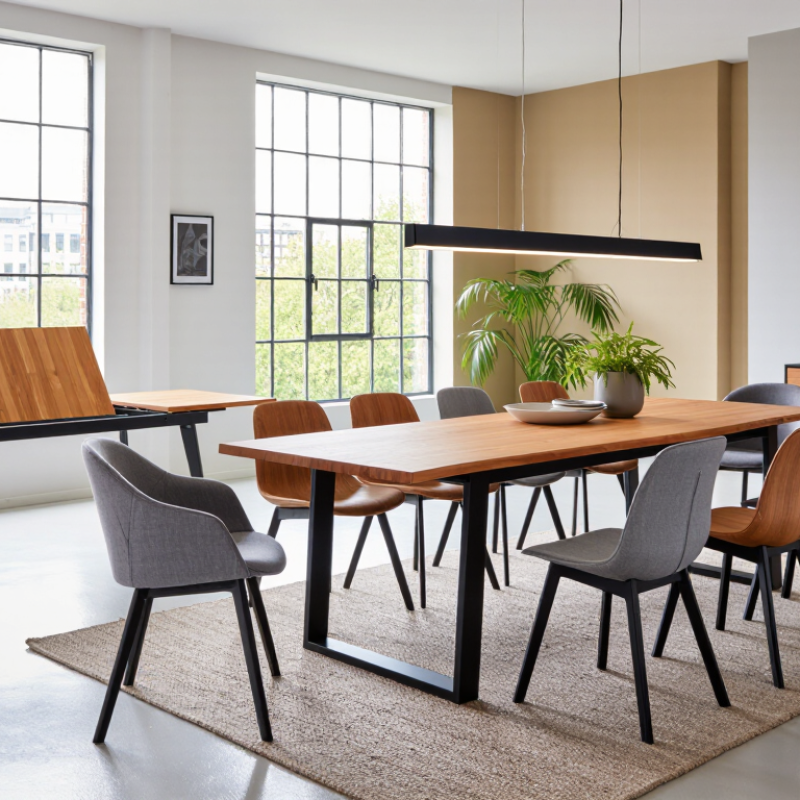
A dining set style is more than a finish, silhouette, or attractive photograph. For global buyers, it combines proportion, cultural fit, comfort, materials, and supply practicality. Grand View Research valued the global furniture market at USD 516.66 billion in 2022. It forecasts a 5.2% annual growth rate through 2030. This scale rewards clear product definitions. A useful top-ten framework includes modern, Scandinavian, industrial, farmhouse, mid-century, traditional, rustic, minimalist, transitional, and Japandi styles.
A successful dining style should feel specific in a showroom and practical in a real home. Consider a compact apartment with a 120-centimeter table, narrow chairs, and limited delivery access. A large rustic set may look impressive but perform poorly there. That is an uncomfortable gap. Certifications, wood traceability, moisture resistance, and care instructions also shape buyer confidence. Reports provide direction, not final judgment. Even experienced buyers can misread a trend when local dining habits, room sizes, or climate conditions are ignored.
Top 10 Dining Set Styles for Global Buyers
The ten leading dining set styles balance appearance, comfort, space, and daily use. Contemporary sets use clean lines, slim legs, and easy-care surfaces for apartments and modern homes. Farmhouse designs add warmth through visible grain, turned legs, and larger tables suited to family meals. Minimalist sets reduce visual clutter with simple shapes and neutral finishes. They work well in compact dining areas. Industrial styles combine metal frames, wood tops, and strong joinery, but buyers should check edge safety and coating quality. Scandinavian designs favor pale wood, curved backs, and lightweight forms that make small rooms feel brighter.
Mid-century styles bring tapered legs and rounded corners, often improving movement around the table. Extendable sets offer practical flexibility, especially for buyers hosting occasional guests. Counter-height sets create a casual atmosphere, although their taller seats may not suit children or older users. Round dining sets encourage conversation and reduce sharp corners, while rectangular sets provide efficient seating along walls. Materials matter. Solid wood may age beautifully, yet it can expand in humid climates. Engineered panels can offer stability, but poor edging may weaken after repeated cleaning. Measure twice. Fit matters. A beautiful set can still fail when chairs block walkways or table legs restrict seating. Product specifications, load testing, moisture guidance, and clear assembly instructions deserve careful review. Even experienced buyers can overlook chair comfort after judging only the table’s appearance.
A practical comparison of widely recognized dining furniture styles, their design characteristics, functional strengths, and global purchasing considerations.
| Rank | Dining Set Style | Core Design Features | Common Materials | Typical Seating | Best Functional Use | Space Suitability | Global Buyer Considerations |
|---|---|---|---|---|---|---|---|
| 1 | Modern Minimalist | Clean lines, restrained decoration, neutral colors, and visually light proportions. | Engineered wood, metal, tempered glass, laminate, and easy-care upholstery. | 4–8 seats | Provides a versatile everyday dining solution that coordinates easily with contemporary interiors. | ApartmentsOpen-plan homes | Flat-pack construction, simple assembly, and neutral finishes support broad market appeal. |
| 2 | Mid-Century Modern | Tapered legs, organic curves, slim profiles, and a balanced combination of wood and upholstery. | Solid or veneered wood, molded plywood, metal, and fabric or faux-leather seating. | 4–6 seats | Combines comfortable daily use with a recognizable retro-inspired appearance. | Dining roomsCompact homes | Wood tone consistency and durable surface finishing are important for export quality. |
| 3 | Scandinavian | Light wood tones, functional forms, soft edges, and a bright, uncluttered visual character. | Rubberwood, ash or beech-style finishes, plywood, powder-coated metal, and woven textiles. | 4–8 seats | Offers comfort, simplicity, and strong compatibility with small or naturally lit rooms. | Small spacesFamily homes | Water-based coatings, sustainable material claims, and compact packaging are often valued. |
| 4 | Farmhouse | Substantial tabletops, turned or square legs, visible wood character, and a warm informal feel. | Solid wood, wood veneer, painted MDF, metal hardware, and woven or upholstered seats. | 6–10 seats | Suited to frequent family meals, entertaining, and interiors that favor a welcoming atmosphere. | Large dining roomsKitchens | Moisture control, kiln-dried wood, and protective packaging help reduce transport-related damage. |
| 5 | Industrial | Strong geometric forms, exposed hardware, dark metal accents, and a workshop-inspired appearance. | Steel, iron-look finishes, reclaimed-look wood, engineered panels, and synthetic leather. | 4–8 seats | Provides a durable-looking solution for lofts, cafés, casual dining areas, and modern homes. | LoftsCommercial spaces | Corrosion-resistant coatings and stable welds are essential for humid or coastal markets. |
| 6 | Extendable Dining Set | Adaptable table length with concealed leaves, butterfly leaves, drop leaves, or slide-out mechanisms. | Solid wood, veneer, engineered wood, metal runners, and reinforced hardware. | 4–6 seats; up to 8–12 when extended | Maximizes everyday floor space while accommodating guests during meals and celebrations. | Multi-use roomsUrban homes | Mechanism durability, alignment, replacement parts, and clear assembly instructions are key. |
| 7 | Round Dining Set | Circular tabletop, centralized seating arrangement, and no sharp corners around the perimeter. | Wood veneer, solid wood, sintered or ceramic-look tops, glass, and metal bases. | 2–6 seats | Encourages conversation and improves circulation in rooms where corner clearance is limited. | Compact roomsBreakfast areas | Base stability, tabletop balance, and efficient carton design matter for shipping and safety. |
| 8 | Classic Traditional | Formal proportions, decorative edges, turned legs, symmetrical details, and timeless styling. | Solid wood, veneers, carved or molded components, brass-look hardware, and upholstery. | 6–10 seats | Supports formal dining, hospitality settings, and interiors requiring a more established appearance. | Formal dining roomsHospitality | Consistent color matching, detailed finishing, and protection for decorative components are priorities. |
| 9 | Contemporary Luxury | Bold silhouettes, sculptural bases, premium-looking surfaces, and coordinated statement seating. | Stone-look ceramic, sintered surfaces, tempered glass, metal, veneer, and performance upholstery. | 6–10 seats | Creates a focal point for upscale residential interiors, show homes, and hospitality projects. | Premium homesHotels | Surface scratch resistance, edge protection, heavier shipping weight, and installation service require planning. |
| 10 | Outdoor Dining Set | Weather-aware construction, open or slatted forms, stackable seating, and easy-clean surfaces. | Powder-coated aluminum, treated wood, synthetic rattan, polypropylene, and outdoor-grade textiles. | 2–8 seats | Designed for patios, balconies, gardens, terraces, restaurants, and seasonal outdoor entertaining. | Outdoor areasHospitality | UV resistance, drainage, rust prevention, local weather suitability, and care instructions are essential. |
Selection basis: The ranking reflects a practical combination of design recognition, functional versatility, space efficiency, material suitability, and relevance to residential and commercial buyers across different markets.
Top 10 Dining Set Styles for Global Buyers
Dining sets differ through material, construction, and usable size. The ten common categories include solid-wood, engineered-wood, glass-top, stone-top, metal-frame, farmhouse, Scandinavian, pedestal, extendable, and compact bistro sets. Grand View Research valued the global furniture market at USD 516.66 billion in 2022. It also projects a 5.2% compound annual growth rate through 2030. This growth increases demand for flexible dining products, but specifications still matter more than appearance.
Solid wood offers repairability and visible grain, while engineered wood supports stable pricing and consistent dimensions. Tempered glass creates a lighter visual effect, though fingerprints remain obvious. Stone tops feel substantial, but require stronger frames and safer edge finishing. Metal construction suits industrial designs and high-use spaces. For export buyers, inspect weld quality, joint alignment, surface coatings, and carton protection. A beautiful table can still wobble.
Size changes the buying decision. Compact bistro sets often suit 60–80 cm tables, while four-seat sets commonly use 100–120 cm lengths. Six-seat extendable models may reach 160–200 cm when opened. Allow at least 90 cm between the table edge and nearby walls or furniture. The International Ergonomics Association recommends reviewing posture and reach during seated work, which also applies to dining comfort. I would not rely on listed capacity alone. Chair width, leg position, and extension hardware can reduce real seating space. Small construction mistakes become expensive across containers.
Materials, construction, and typical residential sizes across popular dining set categories
Typical finished table dimensions are shown in centimeters. The benchmarks reflect commonly specified residential dining furniture: standard dining height is approximately 74–76 cm, while counter-height tables are approximately 89–92 cm. Actual specifications vary by market and product design.
Regional Preferences, Safety Standards, and Import Considerations
Global buyers rarely choose a dining set for style alone. Regional habits shape the shortlist. Common choices include round, rectangular, extendable, pedestal, trestle, counter-height, glass-top, solid-wood, foldable, and outdoor-ready sets. Compact apartments often favor round tables, nesting chairs, and extension leaves. Larger homes may prefer long rectangular tables with heavier frames. In warmer markets, ventilated materials and easy-clean finishes matter. These patterns guide sampling, but they should not become stereotypes.
Safety must be checked before appearance. Inspect table stability, chair load ratings, sharp corners, joint strength, and glass edges. For children’s households, avoid accessible pinch points and unstable high-back chairs. Coatings and upholstery should have clear material information. This matters when surfaces contact food or skin. Requirements differ by destination. Confirm current standards, testing methods, labeling rules, and documents with qualified local specialists. A supplier’s test report helps, but an unverified copy is not enough. Keep samples from the approved production batch.
Import planning begins with accurate specifications. Confirm dimensions, carton strength, cubic volume, moisture protection, and assembly instructions. Solid-wood components may require treatment records or plant-health documents. Rules vary by destination. Confirm tariff classification, origin details, and delivery terms before booking freight. Photograph packed cartons and record inspection results. Small omissions can delay a container. They can also damage trust. My practical view is imperfect: even the safest checklist needs human judgment. Test one assembled set in a real room, not only under warehouse lights.
Global buyers should compare dining sets by room size, use frequency, and local living habits. The ten popular styles include Scandinavian, farmhouse, industrial, minimalist, traditional, modern, rustic, coastal, mid-century, and transitional. Style is only the starting point. A six-seat rectangular table may suit large family meals, while a round table improves movement in compact apartments. Measure doorways too. Many purchasing mistakes happen before delivery.
Material affects lifespan, maintenance, and shipping risk. Solid wood offers repairability, but it can expand in humid climates. Engineered wood usually controls cost and weight, yet edge protection matters. Metal frames support a sharper industrial look, while upholstered chairs improve comfort during long meals.
The 2024 Houzz U.S. Kitchen Trends Study reported that 76% of renovating homeowners included specialty storage. This signals a wider preference for practical, organized homes, not decoration alone. Grand View Research also identifies residential renovation as a key dining furniture demand driver. Data varies by market, so treat forecasts carefully.
Tips Compare seat height, tabletop thickness, finish samples, and assembly instructions. Ask for carton dimensions and replacement-part policies. Check moisture resistance for coastal regions. Do not trust photographs alone. Sit before buying. I would also leave 90 centimeters around the table when possible. That rule can fail in very small rooms, but ignoring circulation creates daily frustration. Consider chairs separately; matching sets sometimes look complete but feel uncomfortable. 马会