• Call Support 86-0596-2628755

2026 Best Dining Tables Buying Guide for Global Buyers

In 2026, buying a dining table means balancing space, durability, style, and budget. A Dinning Table should fit everyday meals, weekend gatherings, and the room around it. Measure the floor area before comparing designs. Leave enough clearance for chairs to slide back without striking a wall. Small details matter.

Global buyers also need to consider materials and delivery. Solid wood can offer a warm, repairable surface, while engineered wood may suit tighter budgets. Glass can make a small room feel open, but fingerprints show quickly. Metal frames often feel sturdy, though their weight may complicate moving. Check listed dimensions, finish descriptions, assembly needs, and return terms before ordering. A polished product photo cannot reveal every edge, joint, or color variation.

This guide compares shapes, materials, sizes, construction, and buying considerations for different homes and markets. It explains what to inspect in product specifications and which questions to ask a seller about packaging and delivery. If possible, test a similar table in person; sitting at it can reveal an awkward leg position that measurements miss. No guide can predict how every finish will age in a particular home. Even careful shoppers sometimes prioritize appearance and regret the maintenance later. That is worth admitting. Use the details here to make a considered choice, not to chase a perfect table.

2026 Best Dining Tables Buying Guide for Global Buyers

What Is a Dining Table and What Roles Does It Serve?

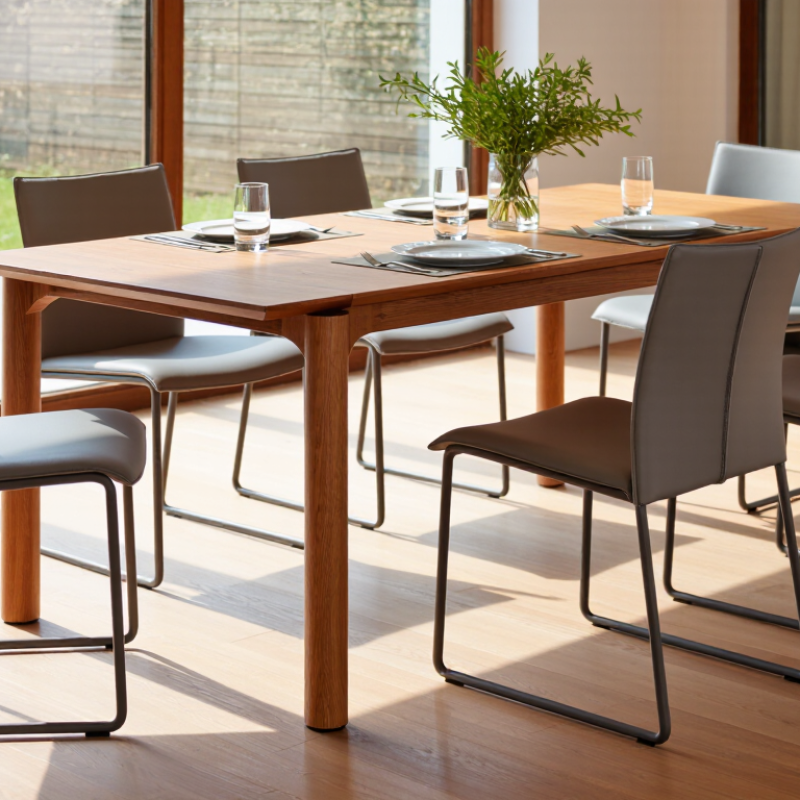
A dining table is a stable, shared surface designed for meals and everyday activities. Its height, top area, and seating arrangement help people eat comfortably and keep dishes within reach. It can also hold a laptop, homework, or a stack of mail. In many homes, it becomes a practical work surface between meals. Small details matter: a wipeable finish helps with spills, while clear space around chairs makes sitting down easier.

The U.S. Bureau of Labor Statistics’ 2023 American Time Use Survey found that people spent about 1.24 hours per day eating and drinking. The U.S. Census Bureau’s 2023 American Community Survey reported an average household size of roughly 2.5 people. These U.S. figures offer useful planning references, not universal rules. A table should fit the household and the room, with enough space to pull out chairs without blocking a walkway. Measure twice. A larger table may look generous in a showroom, yet feel awkward beside a narrow kitchen path. Still, size alone cannot make a meal welcoming; conversation, comfort, and daily habits shape how the table serves its users.

How Do Table Shapes, Sizes, and Seating Capacity Differ?

Table shape changes how people share space. A rectangular table suits long rooms and usually seats more guests along its sides. A 150-by-90-centimetre top often accommodates six, depending on chair width and leg placement. A round table encourages easy conversation and has no corners to navigate. A diameter near 120 centimetres commonly fits four; around 150 centimetres can fit six. These are starting points, not guarantees.

Square tables work well in compact, nearly square rooms. A 90-centimetre square generally seats four, though diners may feel close together. Oval tables soften a long layout while keeping useful seating along the edges. Leave roughly 90 centimetres between the table edge and walls or cabinets where possible. Less clearance can work, but pulling out a chair becomes awkward. Measure with the chairs in place.

Seating capacity depends on more than the tabletop. Allow about 60 centimetres of table edge per person for comfortable elbow room, and check whether the table legs block seats. Wider chairs, bulky arms, or serving dishes reduce practical capacity. A product listing may say “seats eight”; your room may disagree. Sketch the table footprint with tape on the floor, then test the walking path. It is a small step, but easy to skip.

Which Materials and Construction Features Matter Most?

Dining table choice depends on daily use, room conditions, and repair needs—not appearance alone. Solid wood can be sanded and refinished, but it may expand or contract with humidity. Veneer can provide a stable, consistent surface when its core is well made; thin veneer may be difficult to repair after deep scratches. Tempered glass resists stains, yet fingerprints show quickly. Natural stone feels substantial, though it is heavy and may need sealing. No material is maintenance-free.

Construction deserves equal attention. Check that the legs sit firmly and do not wobble on a level floor. Aprons and reinforced corner blocks can improve stability, while well-fitted joints often hold up better than frames relying on weak fasteners. For extension tables, open and close the leaves several times. The mechanism should move smoothly, and the joined surface should feel nearly level. Small gaps matter. A polished showroom impression can be misleading; daily use reveals how well the finish and hardware hold up.

Tips: Measure chair clearance, not just tabletop size. Leave about 90 cm (35 inches) around the table where possible. Ask about veneer thickness, finish care, and replacement hardware before buying. If you cannot inspect the table in person, request close-up photos of its joints and underside supports. Some uncertainty remains with any online purchase.

How Can You Match a Table to Your Space and Lifestyle?

Match the table to the room you actually use, not an imagined entertaining space. The U.S. Census Bureau’s 2023 Characteristics of New Housing reports a median 2,286 square feet for newly built single-family homes. That figure covers the whole house, though; it says nothing about your dining area. Measure the room, then mark the tabletop dimensions on the floor with painter’s tape. Leave about 36 inches for a main walkway, consistent with NKBA planning guidance. Pull out a chair and test the route. Measure twice.

Shape matters as much as size. A round table softens a tight corner and avoids sharp edges on busy walkways. A rectangular table can suit a long room, but check that its corners do not block doors or cabinets. For everyday meals, allow roughly 24 inches of table edge per diner, and consider whether elbows, serving bowls, or homework need extra space. A leaf can help when guests visit, but only if the expanded table still leaves room to move.

Think about daily habits, too. A household with young children may value wipeable surfaces and sturdy legs over delicate finishes. If the table doubles as a work desk, check chair comfort and nearby outlets. A common planning miss is measuring the table but not the chairs. It is easy to do, and annoying to discover after delivery.

What Should Global Buyers Check Before Ordering?

Before ordering a dining table internationally, request a dimensioned drawing, not just a product photo. Check tabletop length, width, thickness, and height against your room and chairs. Allow space to pull chairs back and walk behind seated guests. Measure twice. Ask whether the top is solid wood, veneer, or another material, and request close-up photos of joints, edges, and the underside. A finish sample can reveal color and texture differences that online images hide. Confirm acceptable size and color tolerances in writing.

Shipping details matter just as much as the table itself. Ask for carton dimensions, gross weight, protective packaging details, and whether the table ships assembled or flat-packed. Check the estimated production and transit times, plus who handles destination charges and damage claims. Get it in writing. Clarify the inspection process and whether replacement parts are available if a leg or fitting arrives damaged. Even a careful checklist misses things: a finish that looks warm in a sample may seem cooler under your dining-room lights. If possible, review a sample in the actual room before approving a large order.

2026 Best Dining Tables Buying Guide for Global Buyers — What Should Global Buyers Check Before Ordering?
Buying Dimension What to Check Practical Reference Why It Matters Before Ordering
Seating Capacity Match table size and shape to the number of people who will use it regularly. Approximate planning ranges: 4 seats, rectangular table 48–60 × 30–36 in (122–152 × 76–91 cm); 6 seats, 60–72 × 36–40 in (152–183 × 91–102 cm); 8 seats, 72–96 × 36–42 in (183–244 × 91–107 cm). Capacity varies with chair width, leg placement, and how much elbow room diners prefer. Ask for the usable tabletop dimensions and a seating diagram, not just the advertised seat count.
Table Height Check the finished floor-to-tabletop height and compare it with the chairs. Many standard dining tables are about 28–30 in (71–76 cm) high. Measure the chair seat height and allow comfortable space for legs and aprons. A mismatch can make a table uncomfortable even when its length and width are suitable. Request the table height, underside clearance, apron depth, and compatible chair seat height.
Room Clearance Measure the dining area, including space to pull chairs out and walk behind seated diners. A common planning target is about 36 in (91 cm) between the table edge and a wall or obstruction; more may be needed for a main walkway. Insufficient clearance can restrict chair movement and circulation. Mark the table footprint on the floor and test the layout with chairs pulled out before purchase.
Shape and Layout Choose a shape that suits the room proportions, seating pattern, and access routes. Rectangular tables suit many long rooms; round or square tables can work well in more compact or square spaces. Extendable designs provide variable length. Shape affects circulation, seating flexibility, and how easily guests can reach the center. For extension tables, check both closed and fully extended dimensions, leaf storage, and leg positions.
Top Material Confirm the exact material, finish, surface-care needs, and resistance limitations. Solid wood can show natural grain and may respond to changes in humidity. Veneer has a thin real-wood surface over a core. Glass, stone, and engineered surfaces have different weight and care requirements. Material affects appearance, maintenance, repair options, weight, and shipping risk. Request material specifications, finish details, care instructions, and clear photos of the actual surface sample.
Base and Stability Inspect leg construction, joinery, bracing, hardware, and resistance to wobbling. Stability depends on the complete design and assembly, not on material description alone. Pedestal bases may offer more legroom but need a stable footprint. A sturdy-looking tabletop can still feel unstable if its base or connections are weak. Ask for assembly instructions, hardware details, load guidance, and a clear view of the underside and joints.
Finish and Care Clarify whether the finish is sealed, coated, oiled, or otherwise treated, and how it should be cleaned. Care requirements differ by material and finish. Avoid assuming that a surface is heat-, stain-, scratch-, or water-proof without documentation. Care expectations help prevent damage and reduce the risk of disputes about product performance. Obtain written cleaning guidance and ask about the effect of sunlight, heat, spills, and household cleaners.
Dimensions and Tolerances Verify overall length, width, height, thickness, extension size, and manufacturing tolerances. Confirm dimensions in both inches and centimeters where relevant; conversions may be rounded. Check whether measurements include overhangs or attached leaves. Small differences can affect room fit, chair placement, and delivery access. Request a dimensioned drawing and confirm that the listed measurements are finished-product measurements.
Packaging and Delivery Check carton count, packed dimensions, gross weight, protective materials, and delivery method. Large tops may require separate packaging. Doorways, elevators, stairs, and turning space can limit access even when a room has sufficient floor area. Packaging and access planning can reduce transit damage and failed delivery attempts. Measure the complete delivery route and confirm whether delivery includes room placement, assembly, or packaging removal.
Inspection and Claims Agree on inspection steps, acceptable condition, and the process for reporting transit damage or missing parts. Document carton condition and product condition promptly, following the seller's written claim procedure and stated time limits. Clear records help establish what was received and when any issue was identified. Confirm the required photos, contact method, claim deadline, and responsibility for replacement parts or return freight.
Commercial Terms Review order quantity, lead time, payment schedule, cancellation terms, and shipping responsibilities. For international orders, specify the named delivery location and agreed shipping term in the purchase documents. Written terms clarify costs, responsibilities, and timing across borders. Check currency, applicable taxes or duties, insurance, delivery dates, and who handles import clearance.
Compliance and Documentation Identify destination-market requirements for materials, labeling, packaging, and product documentation. Requirements can vary by destination and product composition; do not assume one document or test applies to every market. Missing or unsuitable documentation can delay import or sale. Confirm applicable requirements with the importer, customs broker, or relevant local authority before shipment.

Planning figures are general guidance, not universal standards. Confirm final dimensions, materials, care instructions, delivery terms, and destination requirements in the product specification and purchase documents.